We may earn a commission when you buy through these links, at no extra cost to you. Prices and details change often: check the product and price on the retailer's page before you buy (accuracy). How we make money
On this page
Buy in this order: a power rack (or squat stands) with safeties, then a barbell and plates, a bench and flooring under the lifting area. Add dumbbells, a pull-up bar if the rack has none, and one cardio machine as room allows. In the UK that is a GYM MASTER GM3 power rack or K-Sport squat stands, the Strength Shop Bastard Bar with GYM MASTER bumper plates (or the Marcy Eco 100kg set in one order) and a GYM MASTER GM3 FID bench. For cardio, the Merach R50 Pro air rower folds to stand against a wall.
By goal: for strength, the core kit is a rack with safeties, an Olympic barbell, plates, a bench and flooring, which covers squats, bench presses, deadlifts, overhead presses and rows. Short of space, or a beginner starting small? Begin with dumbbells (adjustable ones save floor), a bench and a pull-up bar. For cardio, buy one machine that fits your room rather than several. The home gym planner adds up live listed prices from stores in your country for the kit you choose, and checks it fits your room.
Home gym equipment list, in the order to buy it
- A rack or squat stands with safeties: the heavy lifts happen inside it, and the safeties catch the bar when you train alone.
- A barbell and plates, or a set with both in one order.
- A bench: an adjustable one if you only have room for one.
- Flooring under the rack and under any machine.
- Dumbbells: fixed pairs you add to over time, or one adjustable set.
- A pull-up bar, if your rack does not have one.
- A kettlebell and a band set.
- One cardio machine.
Short of room or starting smaller? The budget-first order further down starts with the small kit and adds the rack later.
1. A power rack or squat stands
A rack lets you squat and bench press alone, because the safeties catch the bar if you cannot finish a rep. A full power rack has four uprights and safeties on both sides; squat stands and half racks take less floor and give less cover. Measure your ceiling first: our power rack ceiling height checker shows which racks fit under yours with room for pull-ups and overhead presses. Many racks are meant to be bolted down, so read the maker's fixing notes before you order. Our power rack and squat rack guides, and power rack vs squat rack, go further.
Rack and squat stand picks
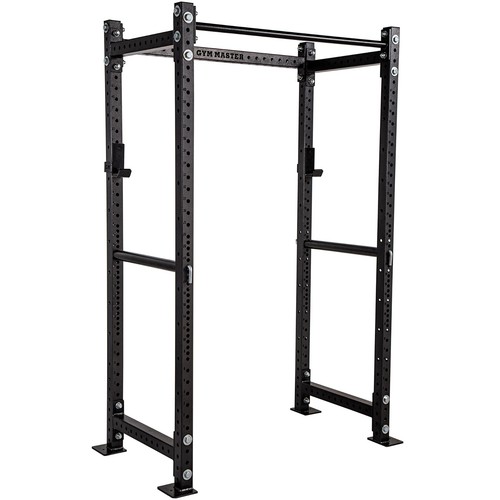 A power rack to start with
11-gauge (3.0 mm) steel with Westside hole spacing, pin and pipe safeties, UHMW-lined J-cups and a pull-up bar, rated to a 400 kg max load. It must be bolted down, and floor fixings are not included.
from£424.99 Squat stands for a small room
Two independent stands, each with its own safety arm (12 positions from 55 to 99 cm) and bar supports in 19 positions, rated to 350 kg. They take less floor than a full rack, though each stand is set separately.
from£129.99
2. A barbell and plates
An Olympic bar has 50 mm (2 inch) sleeves and takes any Olympic plate; a standard bar has thinner sleeves, about 25 mm (1 inch), and takes only standard plates, so choose once. A 20 kg Olympic bar is about 220 cm (7 ft) long, so allow that width at the rack plus room to load plates. Bumper plates are rubber, share one diameter and are made to be dropped; cast iron plates are thinner, so more fit on the bar, but they are not for dropping. Our plate calculator shows which plates go on each side and the fewest plates to buy for every weight up to your max, and barbell weights lists what each type of bar weighs. Our barbell, weight plate and barbell set guides compare more.
Barbell and plate picks
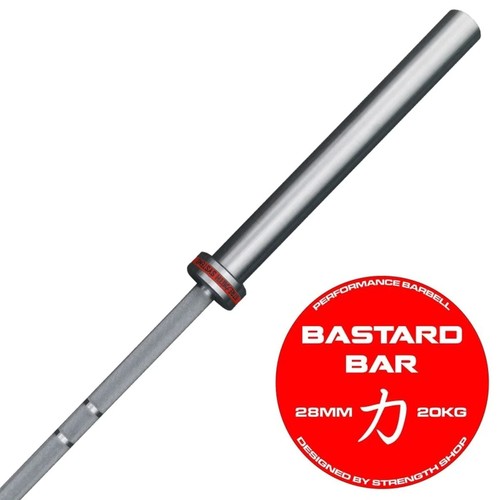 A barbell to start with
Strength Shop
Strength Shop Bastard Bar - with centre knurling
A 20 kg, 28 mm bar with mixed bearings and bushings, a centre knurl and a 3-year warranty from a UK supplier. Strength Shop suggests 120 kg as the top load for Olympic lifts and 250 kg for squats and deadlifts.
from£219.99 Plates you can drop
Solid rubber bumpers with a stainless steel centre ring, all 45 cm across, sold in pairs from 5 to 25 kg or as 100 kg and 150 kg sets.
from£96.99 Bar and plates in one order
A 220 cm, 20 kg Olympic bar rated to 315 kg with 80 kg of British-cast tri-grip plates, which Marcy covers with a lifetime warranty. No plate is heavier than 20 kg.
from£499
3. A weight bench
An adjustable bench covers flat and incline pressing, rows and seated work; an FID bench adds decline. A flat bench has fewer moving parts and is enough if you only press flat. Check the maker's rating, the number of back positions and the gap between the pads, and whether it stores upright. Our weight bench and folding weight bench guides compare more.
Weight bench picks
 A bench to start with
Seven back positions from -15 to 85 degrees on 2 x 3 inch steel tube, rated to 450 kg, so it covers flat, incline and decline pressing.
from£179.99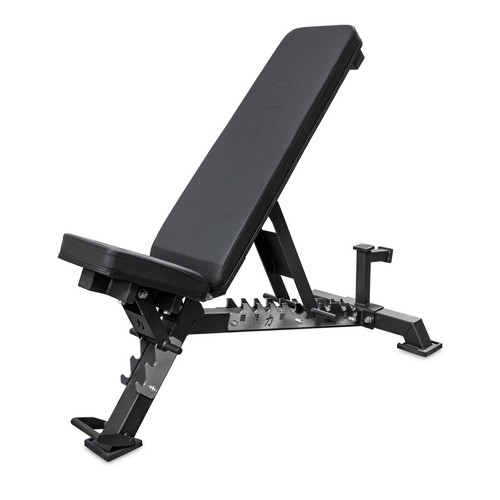 An incline bench that stores upright
Strength Shop
Strength Shop Heavy Duty Utility Bench
Nine back and three seat positions with marked angles, rated to 300 kg, with rollers and a handle so it stands on end. No decline setting is listed.
from£329.99
4. Flooring
Flooring protects the floor and the plates. Thick rubber suits the spot where you deadlift or drop the bar, foam tiles suit bodyweight work and light weights, and a thin equipment mat goes under a cardio machine or bench. Drop pads are a smaller alternative for deadlifts with bumper plates. Our gym flooring calculator counts the pieces for your room and shows how thick published guidance says to go, and our home gym flooring guide compares more.
Flooring and drop pad picks
 Somewhere to drop the bar
Strength Shop
Strength Shop Soft Drop Pads
A pair of foam-filled pads, each 75 x 60 x 15 cm, for deadlifts and drops with bumper plates only. The maker rates each pad to 120 kg.
from£142.99 A mat under a bench or machine
York Fitness
York Fitness Large Equipment & Exercise Mat
A 182 x 76 cm, 5 mm textured rubber mat sized for a bench or one cardio machine. At 5 mm it protects the floor rather than cushioning dropped weights.
from£23.99
5. Dumbbells
Fixed hex dumbbells are quick to pick up and are sold in pairs or singles, so you can buy the weights you use most and add heavier ones later. Adjustable dumbbells put a rack of weights into one set, which saves floor in a small room, but each change of weight takes a moment. Our dumbbell and adjustable dumbbell guides compare more.
Dumbbell picks
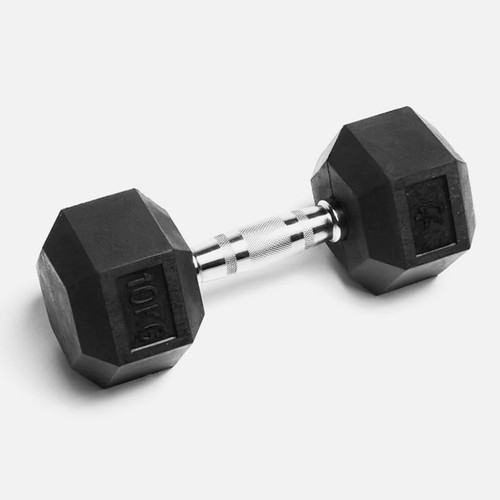 Fixed dumbbells, pair by pair
Strength Shop
Strength Shop Hex Dumbbells
Rubber hex dumbbells from 1 to 75 kg, sold singly, with knurled chrome handles, so you can buy the pairs you need and add heavier ones later.
from£35.99 A small set to start with
Two 1 inch spinlock handles and twelve cast iron plates, 20 kg in all (10 kg per dumbbell as supplied), that take any 1 inch plate added later.
from£45.99
6. A pull-up bar
Many power racks have a pull-up bar built in. If yours does not, or you train with squat stands, add one. A wall bar needs solid fixings into masonry or studs, a doorway bar needs a frame of the width and depth the maker lists, and a free-standing tower needs neither but takes floor. Our pull-up bar guide compares more.
Pull-up bar picks
 A wall-mounted bar
Wide, narrow and neutral grips on a bar 100 cm wide and 69 cm out from the wall, rated to 150 kg, with a hook for a punch bag rated to 80 kg.
from£46.99 A doorway bar
No screws: it twists to lock in frames 73 to 90 cm wide and more than 7 cm deep, rated to 200 kg.
from£26.99
7. A kettlebell and resistance bands
A kettlebell and a band set take little room and add swings, carries, band presses and cable-style rows to the rack and bar. Cast iron bells grow in size as they get heavier and are sold singly, so start with one or two. Our kettlebell weight guide suggests starting sizes, and our kettlebell and resistance band guides compare more.
Kettlebell and band picks
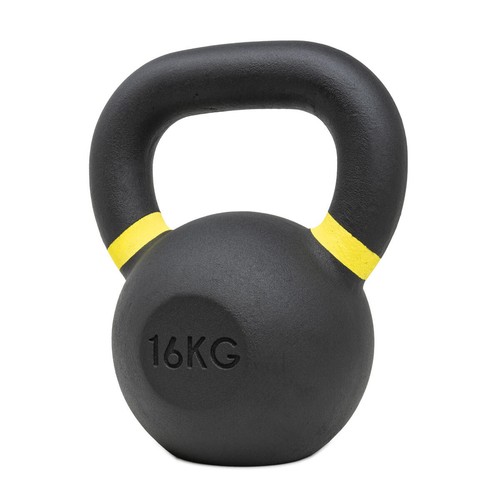 A kettlebell
Strength Shop
Strength Shop Black Powder Coated Kettlebell
Single-pour cast iron with a matte powder coat, sold singly from 4 to 64 kg.
from£51.99 A band set with handles
Five stackable tubes from 10 to 50 lb with two handles, ankle straps, a door anchor and a carry bag.
from£24.99
8. One cardio machine
Buy one cardio machine, chosen for your room and the kind of session you will keep doing. Rowers and air bikes move your arms and legs; a rower needs a long clear run of floor in use, though many fold or stand on end. An exercise bike sits on a small footprint with no clear run needed behind it, and a folding treadmill stands upright when you are done. Our which cardio machine tool compares treadmills, exercise bikes, rowers, cross trainers and air bikes on floor space, ceiling height, noise and folding, and the treadmill space checker gives the room each treadmill needs.
Cardio machine picks
 An air rower that folds
Air resistance in 10 levels and a frame that folds to stand against a wall, rated for users up to 158 kg (348 lb). Unfolded it needs 238 cm (about 94 in) of floor.
from£599.99 An exercise bike for a smaller footprint
Sunny Health & Fitness
Sunny Health & Fitness Active 200 Smart Magnetic Cycling Exercise Bike
A belt-drive spin bike with a 10 kg flywheel, micro-adjustable magnetic resistance and a 136 kg user limit, on a 130 x 61 cm footprint.
from£399.99 An air bike
A fan bike for arms and legs together or separately, rated to 150 kg, with a battery-powered console, so it needs no mains socket.
from£699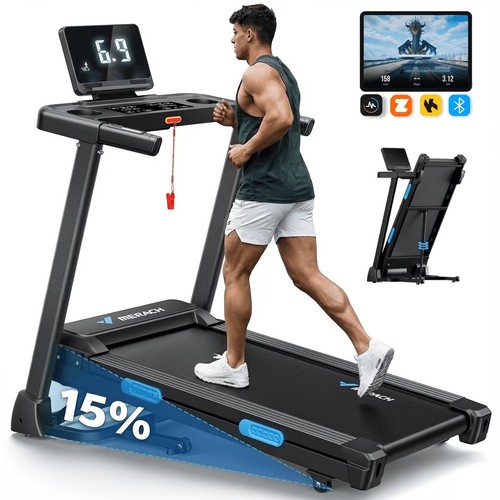 A folding treadmill for walking
A 15% motorised incline and 0.8 to 12 km/h, folding upright onto 65 x 70 cm. The 108 cm belt and 12 km/h top speed suit walking more than running.
from£329.99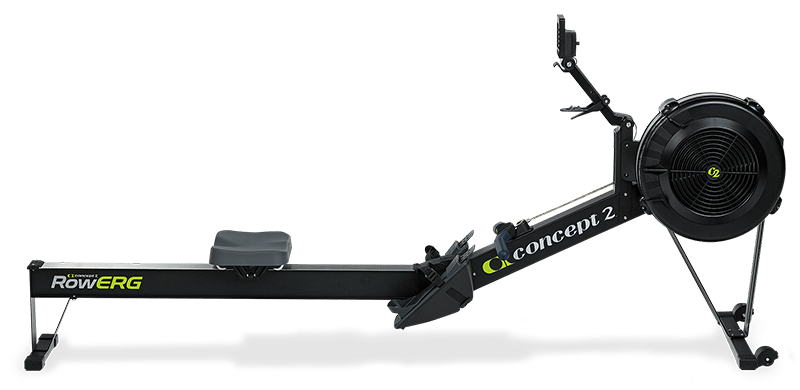 The standard air rower
Concept2
Concept2 RowErg, Standard Legs
An adjustable damper, a PM5 monitor that works with ErgData and 40+ apps, and a 227 kg (500 lb) user rating per Concept2. It splits into two pieces for storage but is 244 cm (96 in) long in use.
Home gym on a budget: what to buy first
A budget home gym is the same kit bought in a different order, starting with the small pieces that work without a rack and adding the barbell kit when you are ready.
- A band set, one kettlebell and a doorway pull-up bar. They fit in a cupboard and cover pulling, pressing and hinging.
- A bench and dumbbells: one adjustable set, or the two or three fixed pairs you will use most.
- A rack or squat stands with safeties, then a bar and plates. A bar-and-plate set is one order; single plates let you spread it out.
- Flooring under the lifting area.
- One cardio machine, last unless cardio is your main goal.
The home gym planner adds up live listed prices from stores in your country for each step, so you can see what the next piece adds before you buy it, and checks it all fits your room.
Frequently asked questions
What equipment do I need for a home gym?
For strength training: a power rack or squat stands with safeties, an Olympic barbell, plates, a bench and flooring under the lifting area. Then dumbbells, a pull-up bar if the rack has none, a kettlebell and bands. Add one cardio machine if you want cardio at home. The home gym planner lists the pieces and adds up live listed prices from stores in your country.
What should I buy first for a home gym?
If you want to lift a barbell, buy the rack first, because the safeties are what let you squat and bench alone. If you are short of room or starting out, buy a bench and dumbbells first. If cardio is the goal, buy the one machine that fits your room.
Is a power rack worth it for a home gym?
It suits you if you want to squat, bench press and overhead press with a barbell, train alone, and have the ceiling height and floor for one (our power rack ceiling height checker helps). It suits you less in a small or low room, or if you plan to train mostly with dumbbells, bands or a machine: squat stands, a pull-up bar and adjustable dumbbells take less space.
How much space does a home gym need?
Start with the rack's footprint from the maker, then add the bar: a 20 kg Olympic bar is about 220 cm (7 ft) long, and you need room past each end to load plates. Allow for a bench in front of the rack and a cardio machine's length in use. The home gym planner checks a kit against your room, and the treadmill space checker covers treadmills.
How do I build a home gym on a budget?
Buy in stages: bands, a kettlebell and a pull-up bar first, then a bench and dumbbells, then a rack, bar and plates, then flooring, and a cardio machine last. Buying plates singly lets you add weight as you need it. The home gym planner adds up live listed prices for each stage.
Do I need a cardio machine in a home gym?
Not for strength training. Buy one if you want cardio sessions at home, and pick it for your room: a bike sits on a small footprint, a rower needs a long run of floor but often folds, and a treadmill needs clear room behind it (the treadmill space checker gives it per model). Our which cardio machine tool compares them on space, noise and folding.
How we chose
We have not tested this equipment. We picked from the products we list, using the makers' own specifications (ratings, adjustments, dimensions, warranties), whether a store inside your country sells them, and what each piece adds to a first home gym. In each section, picks with a listing from a store in your country come first, and the few sold only by their maker come after them. Each section names our full guide for that kind of equipment, which compares more models.
Related tools
Get price drops on this kit by email
Prices change. We'll email you when one we compare drops, only when it's worth sending.