
We may earn a commission when you buy through these links, at no extra cost to you. Prices and details change often: check the product and price on the retailer's page before you buy (accuracy). How we make money
On this page
A home gym setup starts with a tape measure, before you buy anything. Check the ceiling where a rack would stand, the floor a treadmill needs behind it and what the floor is made of, then buy in order: the rack (or adjustable dumbbells if a rack will not fit), then the bar and plates, a bench, the flooring under them, and a cardio machine last if there is room. The kit lists below fill three kinds of space with equipment sold in your country, and the step-by-step guide follows them.
For a US garage or basement, Titan's T-3 rack, TITAN Series bar, economy bumper plates, adjustable bench and 1.6 in rubber tiles make a full barbell setup, and the 71 in T-2 rack suits a ceiling under 7 ft. A dumbbell corner can start with Fitvids' convertible set, Titan's Elite Series FID bench that stores upright, and BalanceFrom foam tiles.
Kit list: a rack-based strength setup
 The rack
Titan Fitness
Titan Fitness T-3 Series Power Rack, 82 in x 24 in
An 82 in bolt-down rack on 2 x 3 in 11-gauge uprights with Westside hole spacing, J-hooks and two pull-up bars, rated to 1,100 lb rackable. It stands 2 in under a 7 ft ceiling.
from$559.99 A rack for a low ceiling
Titan Fitness
Titan Fitness T-2 Series Power Rack, 71 in
Only 71 in (180 cm) tall, in 2 x 2 in 14-gauge steel with holes 2 in on centre, pin and pipe safeties, J-hooks, a pull-up bar and two plate horns, rated to 850 lb rackable.
from$474.99- The bar
Titan Fitness
Titan Fitness TITAN Series Cerakote Olympic Barbell
A USA-made 20 kg multipurpose bar with a 28.5 mm Cerakote-coated shaft in 190,000 PSI steel, medium volcano knurling with IWF and IPF marks, no centre knurl and bronze bushings.
 The plates
Titan Fitness
Titan Fitness LB Economy Black Bumper Plates
Black rubber bumper plates over a steel core at IWF diameter, in pairs of 10, 15 and 25 lb and singly in 35, 45, 55 and 100 lb, for 2 in Olympic bars.
from$94.99 The bench
Titan Fitness
Titan Fitness TITAN Series Adjustable Bench
Nine back pad and three seat positions on numbered gussets, and a back pad that slides to close the gap when flat. Titan rates it to 1,000 lb flat and 600 lb inclined.
from$574.99 The floor under the rack
Titan Fitness
Titan Fitness Rubber Lifting Tiles, 4 Pack
Four solid rubber tiles, each 23.5 in square, 1.6 in (40.6 mm) thick and 28 lb, that cover 47 x 47 in and fit Titan deadlift and Olympic platforms.
from$204.99
Kit list: a dumbbell and bench corner
 Dumbbells that convert
A 60 lb set of plates with two dumbbell handles, a barbell connector and kettlebell handles, so it builds into a dumbbell pair, a barbell, two kettlebells or push-up stands.
from$64.99 A bench that stores upright
Titan Fitness
Titan Fitness Elite Series Adjustable FID Bench
Flat, incline and decline on a tripod frame, with six back angles from 0 to 85 degrees and four seat positions, rated to 1,000 lb flat and 500 lb inclined. It stands upright and rolls on rear wheels when you need the floor.
from$318.24- Floor for the corner
Half-inch EVA foam tiles of 24 x 24 in that interlock with end borders, in packs from 24 to 144 sq ft, for floor work and light dumbbells.
Kit list: a cardio corner
 A treadmill that folds
Folds flat to 20 cm (7.9 in) high, with a 40.6 x 105 cm (16 x 41 in) belt, a top speed of 8.7 mph (14 km/h) and a 265 lb (120 kg) user limit.
from$379.99 A walking pad
A flat pad 4.2 in (10.7 cm) tall with a 35 x 15 in (90 x 38.1 cm) walking area, up to 4 mph (6.4 km/h) by remote and a 265 lb (120 kg) user limit. It arrives assembled.
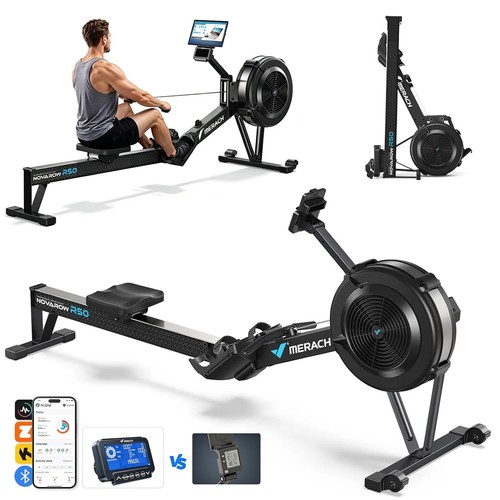 A rower that folds
An air rower with 10 resistance levels that folds to stand against a wall. It is 238 cm (94 in) long in use, and Merach rates it for users up to 158 kg (348 lb) and 1.19 to 2.10 m tall.
from$619.99 A bike
Sunny Health & Fitness
Sunny Health & Fitness Fitness Pro II Stationary Indoor Cycling Bike
A belt-drive indoor cycling bike with felt-pad friction resistance, a 40 lb flywheel and a 275 lb user limit, on a 49.5 x 20 in footprint.
from$479.95 A mat for under the machine
One 3 x 7 ft (91 x 213 cm) mat of 1/4 in closed-cell foam, made to go under bikes, rowers, treadmills and benches.
from$44.99
Our home gym planner adds up live listed prices from stores in your country for the kit you choose, and checks that it fits the room you enter.
How to build a home gym, step by step
- Choose the room. A garage, a spare room, a basement or a corner of a living room each suit different kit (layout ideas below).
- Measure it: floor length and width, the ceiling at its lowest point, the door you will carry kit through, and where the sockets are.
- Decide what you will train. A barbell needs a rack, a bench and a lifting floor; dumbbells need a bench and a mat; a cardio machine needs its footprint plus the clear space its manual asks for.
- Buy the piece the rest depends on first, usually the rack or the dumbbells, then the bar, plates, bench and flooring that go with it.
- Lay the floor before the heavy kit goes in, and fix each piece the way its maker says.
- Add storage and a cardio machine once the main kit is in and you can see the space that is left.
The home gym planner follows the same steps and checks that the kit you pick fits your room.
Measure the room before you buy
Ceiling height for a rack and overhead work
Measure the ceiling where the rack will stand, at its lowest point, under any beam, light fitting or garage door track, then take off the thickness of the flooring. Makers list a rack's overall height; use that figure for fit. If the ceiling is under about 213 cm (7 ft), shortlist short racks first. Overhead presses and pull-ups need more: stand on the floor you will lift on, raise your arms straight overhead and measure to your fingertips, then allow room for the bar or your head above the pull-up bar.
| Model | Titan FitnessTitan Fitness T-3 Series Power Rack, 82 in x 24 in | Titan FitnessTitan Fitness T-2 Series Power Rack, 71 in |
|---|---|---|
| Best price | $559.99 | $474.99 |
| Check price | ||
| Height | 82 in (208.3 cm) | 71 in (180.3 cm) |
| Footprint | 54 x 32.8 in (137.2 x 83.2 cm) | 57 x 50 in (144.8 x 127 cm) |
| Capacity | 1,100 lb (498.95 kg) | 850 lb (385.55 kg) |
| Folds away | No | No |
Our power rack ceiling height checker takes your ceiling, your flooring and your own measured reach, and shows which racks we list fit with room for pull-ups and overhead presses.
Floor space for a treadmill, rower or bike
A cardio machine needs more floor than its footprint. Marcy's treadmill manuals, for example, ask for more than 240 cm of free space behind the deck and 60 cm on each side; follow the figure in the manual for your model. Add the deck height to your own height, plus room for your stride, and check the ceiling too. A rower needs its full length in use, and some fold or stand on end afterwards. Every machine with a motor or a console needs a socket within reach of its cable.
Our treadmill space checker lists the dimensions of every treadmill and walking pad we list, with the clear floor behind and beside each one, and the ceiling height you need at your height.
Flooring thickness
Match the floor to what goes on it. Barbells and free weights need solid rubber, and for a lifting floor we suggest 15 mm (5/8 in) or more, with drop pads where you drop the bar. A treadmill, bike or rower needs only a thin equipment mat sized to its footprint; the makers of 5 to 6 mm mats describe them as floor protectors for machines, not flooring for dropped weights. Foam tiles suit floor work and light dumbbells.
Our gym flooring calculator works out how many tiles or mats your room needs from its size and the tile size, with a waste allowance you choose, and shows the flooring we list.
Power, light and air
Plan sockets before the kit arrives, so a treadmill or bike cable does not cross a walkway. A window or a door you can open, and somewhere to put a fan, make a small room easier to use. Garages and outbuildings are often unheated and can be damp: read the operating conditions in the manual of any machine with a motor or a console before it goes in one.
Noise
Dropped plates are usually the loudest sound in a home gym: bumper plates are made to land on rubber flooring or drop pads, and iron plates are not. A motorised treadmill adds motor noise and footfall, an air rower or air bike gets louder the harder you pull because the fan is the resistance, and magnetic resistance on a bike or rower has no parts rubbing together. In an upstairs room, footfall and dropped weights carry through the floor, so a ground-floor room or a garage suits barbell work better.
Home gym layout ideas by room
A garage gym
A garage usually has the floor and the ceiling for a rack, a concrete floor for bolting one down, and a door wide enough to carry kit in. Put the rack against the back or side wall, lay rubber across the whole lifting area, and keep plates on storage pegs off the floor. If a car has to come back in, a rack that folds to the wall and a bench that stores upright clear the floor after each session. Check the height under the garage door track and opener, not only the ceiling. Our garage gym guide goes further on garage flooring, racks and storage.
A spare room or bedroom
A spare room suits a dumbbell and bench corner, a cardio machine, or both. Check the floor first: a solid floor on the ground storey takes a rack and plates better than an upstairs room on joists. Put the heaviest kit near a wall, the cardio machine where its manual's clear space behind and beside it fits, and a mat or foam tiles under everything.
A basement
A basement often has a solid floor and a low ceiling, so measure under the lowest beam or duct before choosing a rack, and look at short racks. Check the stairs and the turn at the bottom: a treadmill, rack uprights and a bench all need to come down them, boxed or in parts.
A corner of a living room
Where the room has another use, as in an apartment, choose kit that packs away: adjustable dumbbells, a folding bench, a walking pad or a treadmill that folds, and foam tiles that lift up. Measure the folded footprint as well as the size in use, and where the kit will stand between sessions.
What to buy first: the buying order
- The rack, or the dumbbells. Everything else fits around it. If a rack will not fit under the ceiling or through the door, a dumbbell and bench corner is the setup to build.
- The bar and plates. Check the bar is long enough to span the uprights of the rack (7 ft, 2.2 m, is the common Olympic bar length) and that the plates fit the bar: 2 inch (50 mm) holes for Olympic bars, 1 inch (25 mm) for standard bars.
- A bench. An adjustable or FID bench does more than a flat one, and some fold or stand upright for storage.
- Flooring. Rubber under the rack and where the bar lands, a mat under each machine. Lay it before the heavy kit goes in.
- Storage: plate pegs on the rack or a plate tree, and a rack for dumbbells, so the floor stays clear.
- A cardio machine, last, once you can see how much floor is left.
Our plate calculator shows which plates go on each side of the bar for every weight up to your max and the fewest plates to buy, and our barbell weights guide gives what each type of bar weighs.
Home gym setups by goal and space
A rack-based strength setup
For squats, bench presses and deadlifts with a barbell, you need a rack with safeties, a bar, plates, a bench and a rubber floor. Allow the rack's footprint plus room to load plates from each side and to walk the bar out, and keep the rack clear of windows and doors. A rack with a pulley adds lat pulldowns and rows without a second machine.
In the US, the Titan T-3 Series rack is 82 in tall, 2 in under a 7 ft ceiling, and the T-2 Series is 71 in, for a basement with a lower ceiling. Titan's 1.6 in rubber tiles cover 47 x 47 in per pack of four.
A dumbbell and bench corner
Adjustable dumbbells and a bench fit where a rack will not: under a low ceiling, in a spare room or in a corner of a living room. Allow the bench's length plus room either side to lower the dumbbells, and a stand or shelf so they do not sit on the floor. Foam tiles or a mat under the bench protect the floor.
In the US, Fitvids' 60 lb set builds a dumbbell pair, a barbell or two kettlebells, Titan's Elite Series FID bench stands upright on rear wheels between sessions, and BalanceFrom's half-inch foam tiles go under both.
A cardio corner
Pick the machine for the floor you have. A walking pad or a treadmill that folds suits a room with another use, a rower that folds or stands on end needs its full length only while you use it, and in use a bike takes less floor than a treadmill or a rower. Put a mat under it, a socket within reach, and leave the clear space behind and beside it that the manual sets out. Our cardio machine selector compares treadmills, walking pads, bikes, rowers, ellipticals and air bikes on floor space, ceiling height, noise and folding.
A small-room setup
In a small room, combine the corner and the cardio kit that packs away: adjustable dumbbells, a bench that folds or stores upright, foam tiles and a walking pad or folding treadmill. If a barbell matters more, a rack that folds to the wall leaves the floor clear between sessions, as long as the wall suits the maker's fixing instructions. Our compact home gym guide has more kit for small spaces.
Frequently asked questions
What do I need to set up a home gym?
For barbell training: a rack with safeties, a bar, plates, a bench and rubber flooring. Without a rack: adjustable dumbbells, a bench and a mat. A cardio machine is optional and goes in last. The kit lists above show one of each for your country, and the home gym planner adds up live listed prices from stores in your country.
How much space do I need for a home gym?
Add up the footprints and the space around them. A power rack needs its footprint plus room to load plates from each side; a bench needs its length plus room to lower the weights; a treadmill needs its footprint plus the clear floor its manual asks for (Marcy's manuals ask for more than 240 cm behind and 60 cm each side). The home gym planner checks your chosen kit against your room.
How high does a ceiling need to be for a home gym?
For a rack, higher than the rack's overall height plus your flooring, with room for the bolts and fittings above it. Short racks are built for ceilings under about 213 cm (7 ft). Overhead presses and pull-ups need more height, so measure your reach. For a treadmill, add the deck height, your height and room for your stride. The power rack ceiling height checker and the treadmill space checker work these out.
What flooring do I need for a home gym?
Solid rubber of 15 mm (5/8 in) or more where you lift, drop pads where you drop a bar with bumper plates, a thin equipment mat under each cardio machine, and foam tiles for floor work and light dumbbells. The gym flooring calculator tells you how many tiles your room needs.
Can you put a home gym in a garage?
Yes: a garage usually has the height and the solid floor a rack needs. Check the height under the door track and opener, lay rubber over the concrete, and read the manual of any machine with a motor or console for its operating conditions, because garages are often unheated and can be damp. A rack that folds to the wall leaves room for a car.
What should I buy first for a home gym?
The piece the rest depends on: a rack if you will train with a barbell, or adjustable dumbbells if a rack will not fit. Then the bar and plates, a bench, the flooring, storage, and a cardio machine last. Our best home gym equipment guide lists the essentials in that order.
How we chose
We have not tested this equipment. For each kit list we chose current models sold new from inside each country, from our guides to racks, bars, plates, benches, dumbbells, flooring, treadmills, rowers and bikes, on the specs their makers publish: heights, footprints, load and user ratings, what is in the box and how each piece folds or is fixed. Where a pick has a listed store offer we show it, and where a maker does not state a figure we leave it out rather than estimate.
Related tools
Get price drops on this kit by email
Prices change. We'll email you when one we compare drops, only when it's worth sending.
Sources
- Marcy All-Terrain 4500 owner's manual: free space behind and beside the treadmill
- Titan Fitness: T-3 Series Power Rack specification table (rackable and whole-rack capacity)
- GYM MASTER: GM3 Power Rack heights, bolt-down and fixing notes
- Strength Shop: Riot Wall Mounted Foldable Rack, fixing and fold
- Strength Shop: Soft Drop Pads, load per pad and bumper plates only