We may earn a commission when you buy through these links, at no extra cost to you. Prices and details change often: check the product and price on the retailer's page before you buy (accuracy). How we make money
On this page
A balance board gives you an unstable surface to stand, kneel or brace on. Choose a half-ball trainer if you want one piece for standing, kneeling and floor exercises, a round wobble board if you want something small and light that tips in every direction, a long or rocker board if you want to stand with your feet apart, and a foam pad or air cushion if you want the lowest option that doubles as a kneeling cushion. Our picks for each type are below.
Our picks
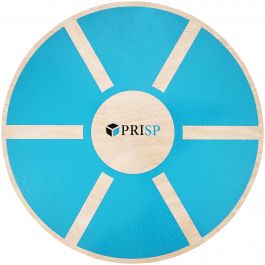 Best wooden wobble board
A 40 cm (15.75 in) wooden top on a plastic base that turns through 360 degrees with a 15 degree tilt, rated to 300 lb (136.08 kg).
from$26.99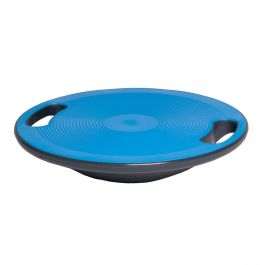 Best wobble board with handles
A 40 cm (15.75 in) plastic wobble board, 9.5 cm high and 1.23 kg, with built-in handles PRISP sells for push-ups and planks.
from$29.99 Best for one foot
A 30 x 14 cm wooden rocker, 3 cm high and 0.38 kg, sized for one foot, with a hook-and-loop difficulty setting, a storage bag and a 200 kg rating.
from$12.67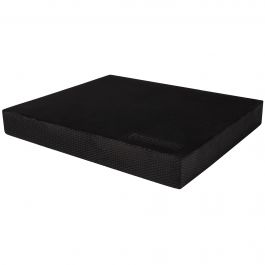 Best foam pad
Closed-cell, high-density TPE foam with a textured non-slip top, in Large and XL sizes, that also works as a kneeling cushion.
from$25.99
| Model | PRISPPRISP Wooden Wobble Balance Board | PRISPPRISP Wobble Board Balance Trainer | VEVORVEVOR Foot and Ankle Balance Board PH-9 (12 in) | PRISPPRISP Foam Balance Pad |
|---|---|---|---|---|
| Best price | $26.99 | $29.99 | $12.67 | $25.99 |
| Check price | ||||
| Type | Wobble board | Wobble board | Balance board | Balance pad |
| Max user | 136.08 kg (300 lb) | 136.08 kg (300 lb) | 200 kg (441 lb) | Not listed |
| Height | Not listed | 9.5 cm (3.7 in) | 3 cm (1.2 in) | Not listed |
| Weight | Not listed | 1.23 kg (2.5 lb) | 0.38 kg (1 lb) | Not listed |
| Diameter | 40 cm (15.7 in) | 40 cm (15.7 in) | Not listed | Not listed |
| Footprint | Not listed | Not listed | 30 x 14 cm (11.8 x 5.5 in) | Not listed |
How to choose a balance board for adults
- Type. A half-ball trainer is an inflated dome on a flat, rigid base. A wobble board is a round deck on a dome or pivot that tips in every direction. A long balance board has a deck you stand across with your feet apart; a rocker board rides on a separate roller and rolls as well as tips. A plank board is made for your forearms rather than your feet. A foam pad or air cushion is a soft, low surface with no pivot at all.
- Size. Diameter or deck size sets how much room you have for your feet and hands. Half balls are commonly 50 to 65 cm across and round wobble boards about 40 cm; a long board is wider than either.
- Height. A taller board puts you further off the floor. A foam pad is the lowest, a round wobble board sits a little higher, and a half ball or a long board on a roller or pivot sits highest. The compare table shows each pick's published height.
- User limit. Stay within the limit the maker states. Some makers publish none, and we say so in the pick; the compare table shows each published figure.
- Weight and storage. A round wobble board or a foam pad is small enough to slide under a bed or desk. A half ball is bulkier and heavier, and takes a corner or a wall bracket.
- What comes in the box. Some half balls include resistance bands and a pump; some wobble boards have carry handles or hand ropes. Check before you buy extras separately; our resistance bands guide compares bands sold on their own.
- Warranty. Check the maker's warranty length and whether it covers home use only; some makers state none.
Quick picks by need
- Standing desk: the PRISP Wooden Wobble Balance Board, which PRISP sells for standing desks.
- Lowest, softest surface: the PRISP Foam Balance Pad, in Large and XL.
- Handles for push-ups and planks: the PRISP Wobble Board Balance Trainer.
- One foot at a time: the VEVOR PH-9, 30 x 14 cm and 3 cm high.
Best balance board for a standing desk
At a standing desk, height matters most: the taller the board, the further it lifts you from your normal desk height. A pad, an air cushion or a low round board changes it least. Check you can still reach the keyboard comfortably, and use the board on a flat floor.
PRISP sells its Wooden Wobble Balance Board for standing desks: a 40 cm (15.75 in) round board that turns through 360 degrees with a 15 degree tilt, rated to 300 lb (136.08 kg). For a softer, lower surface, PRISP says its Foam Balance Pad works as a cushion for standing.
PRISP Wooden Wobble Balance Board: best wooden wobble board
A round wooden top, 15.75 in (40 cm) across, on a plastic base that rotates through 360 degrees with a 15 degree tilt. The top has a textured anti-slip surface and comes in blue or grey. PRISP rates it to 300 lb (136.08 kg) and sells it for core exercises and for standing desks. PRISP gives no height or board weight on its page.
Pros
- 360 degree rotation with a 15 degree tilt
- 300 lb (136.08 kg) rating
- Textured anti-slip top
Cons
- No height or weight published
- Fixed 15 degree tilt, nothing to adjust
PRISP Wobble Board Balance Trainer: best wobble board with handles
A round plastic wobble board, 15.75 in (40 cm) across and 3.75 in (9.5 cm) high, with a ribbed non-slip top. Two built-in 12.5 x 4 cm handles let you carry it and hold it for push-ups and planks. It is made of heavy-duty plastic and thermoplastic rubber, weighs 1.23 kg (2.72 lb) and PRISP says it holds up to 300 lb (136.08 kg).
Pros
- Built-in handles for push-ups and planks
- 300 lb (136.08 kg) rating
- Light at 1.23 kg
Cons
- Plastic rather than wood
- Fixed 9.5 cm height
VEVOR Foot and Ankle Balance Board PH-9: best for one foot
The smallest board here: a 30 x 14 cm multi-layer wood board, 3 cm high including its rocking base, sized for one foot at a time. A hook-and-loop setting changes the difficulty, the base is anti-slip rubber and a storage bag comes in the box. It weighs 0.38 kg and VEVOR rates it to 200 kg.
Pros
- 0.38 kg with a storage bag
- Hook-and-loop difficulty setting
- 200 kg weight capacity
Cons
- Sized for one foot, not for standing with both feet
- VEVOR gives no tilt angle
PRISP Foam Balance Pad: best foam pad
PRISP's pad is closed-cell, high-density TPE foam with a textured non-slip surface, in Large and XL sizes and several colours. PRISP says it is water resistant and easy to clean, and that it works as a cushion for kneeling, sitting or standing. PRISP gives no dimensions or weight limit on its page.
Pros
- Two sizes: Large and XL
- Water-resistant, easy-clean foam
Cons
- No dimensions or weight limit published
Frequently asked questions
Is a balance board worth it?
It suits you if you want a small, light piece of kit for standing, kneeling and floor exercises that stores under a bed or desk. It is not the right buy if you want something to replace a bench, a step or a cardio machine: it is a surface to stand or brace on, nothing more.
What is the difference between a wobble board and a balance board?
A wobble board is round and sits on a dome or pivot, so it tips in any direction. "Balance board" is the wider name: it also covers long boards you stand across, half-ball trainers and foam pads. Makers and shops use the names loosely, so check the shape and the height they state.
Can you use a balance board at a standing desk?
Yes, if the height suits you: our "Best balance board for a standing desk" section above names the picks sold in your country. A foam pad, an air cushion or a low round board keeps you closest to your normal desk height; a half ball or a tall long board lifts you further. Check you can still reach the keyboard comfortably, and stand on it on a flat floor.
How much weight can a balance board hold?
Across our picks in all four markets, published limits run from 100 kg to 300 kg, and the compare table shows the figure for each pick sold in your country. Some makers give only an approximate figure, as BOSU does for its Balance Pad, and some publish none; then ask the seller before you buy.
Which is the best wobble board: a half ball or a round board?
A half ball is taller and wider, can be used dome up, and needs inflating to the height the maker gives. A wobble board is lower, lighter and rigid, with nothing to inflate. Choose a half ball for the bigger surface and a wobble board for the smaller footprint and easier storage.
How we chose
We have not tested these products. We compared the makers' own specifications for type, diameter, height, user limit, weight, warranty and what comes in the box, and kept only products sold new by a seller inside each market. Where a maker does not state a figure, we say so rather than estimate it. Where we compare list prices, we use the maker's own list price. We make no claims about effects on the body.
Get price drops on this kit by email
Prices change. We'll email you when one we compare drops, only when it's worth sending.