
We may earn a commission when you buy through these links, at no extra cost to you. Prices and details change often: check the product and price on the retailer's page before you buy (accuracy). How we make money
On this page
Choose a kettlebell if your main lifts are swings, cleans, snatches and Turkish get-ups, or you want one weight you can hold with one hand or two. Choose dumbbells if you mostly press, row, curl and raise with a weight in each hand, and want smaller steps between weights. You do not have to pick only one: a bell or two and a few pairs of dumbbells fit in the same corner.
One of each to look at
 If swings are your main lift
Single-piece powder-coated cast iron bells in 14 weights from 4 to 40 kg, marked in kg and lb with a colour ring for each weight.
from$67.99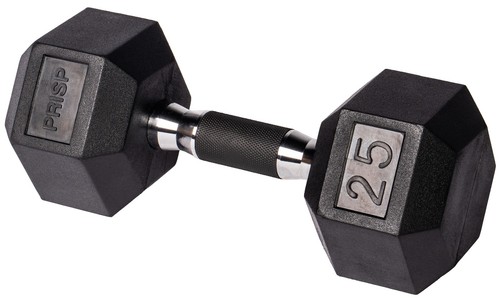 If you want a weight in each hand
Rubber-encased cast iron hex dumbbells sold singly from 5 to 60 lb, with a contoured handle and a rubber insert.
from$39.99 If you want several weights in one
One bell with seven settings from 5 to 44 lb (2.3 to 20 kg) in 6.5 lb steps, on a 28.5 mm die-cast aluminium handle.
from$141.54
Kettlebell vs dumbbell at a glance
- Where the weight sits: below and in front of one loop handle on a kettlebell; split between two ends of a short bar on a dumbbell, balanced around your grip.
- Lifts each suits: a kettlebell for swings, cleans, snatches and Turkish get-ups; dumbbells for presses, rows, curls and raises. Both for squats, lunges and carries.
- Handle: a kettlebell loop takes one hand or two; a dumbbell handle takes one hand and is usually knurled.
- Weight steps: fixed kettlebells usually step in 2 or 4 kg jumps; fixed dumbbells come in smaller steps at the lighter end.
- Singles or pairs: kettlebells are usually sold one at a time; dumbbells in pairs or singly, depending on the maker.
- Adjustable forms: both, with plates or a dial in one kettlebell or in a pair of dumbbells.
- Storage: flat-based bells stand in a row on the floor; hex dumbbells sit on the floor without rolling, and a rack keeps pairs tidy.
Where the weight sits
A kettlebell is a ball of iron or steel with one loop handle on top, so the weight sits below and in front of your hand. A dumbbell has a weight at each end of a short handle, so it balances around your grip.
That one difference decides what each suits. A kettlebell suits swings, cleans, snatches and Turkish get-ups, where the bell moves around your hand. A dumbbell suits presses, rows, curls and raises, where you want the load centred in your hand. Both work for squats, lunges and carries.
Handles and grip
A kettlebell handle is a loop you can hold with one hand or two. A dumbbell handle is a short bar for one hand, usually knurled for grip. Cast iron kettlebells get bigger as they get heavier, and the handle often gets thicker. Competition kettlebells keep one size and one handle at every weight, so your grip and rack position stay the same as you move up.
- VEVOR K002 adjustable: a 28.5 mm die-cast aluminium handle.
- PRISP Competition: one handle size at every weight. PRISP gives no diameter and notes the smaller handle makes two-handed work harder for wide hands.
- PRISP cast iron: a slightly textured handle, with no diameter given.
- PRISP hex dumbbells: a contoured handle with a PVC rubber insert rather than knurled steel.
Weight steps and range
On the ranges we list, fixed kettlebells step in 2 or 4 kg jumps, and fixed dumbbells in 1 to 2.5 kg or 5 lb jumps at the lighter end, widening to 5 kg on some heavier pairs. Dumbbells usually give you smaller steps as you move up. Check the steps in the part of the range you will use, not only the lightest and heaviest weight.
For fixed kettlebells and dumbbells, the range is the span of sizes the maker sells, and you buy each size separately. Each line below says whether that range is sold singly or in pairs.
- PRISP cast iron kettlebells: 14 weights from 4 to 40 kg. Sold singly.
- PRISP Competition kettlebells: 8, 12, 16, 20, 24, 28 and 32 kg. Sold singly.
- VEVOR K002 adjustable kettlebell: one bell set to 5, 11.5, 18, 24.5, 31, 37.5 or 44 lb.
- PRISP hex dumbbells: 5 to 60 lb. Sold singly, so a pair is two purchases.
- PRISP 200 lb adjustable set: a pair of handles that load to 100 lb (45.36 kg) each with 2.5, 5 and 10 lb plates.
- Merach 2444: a pair, each set to one of 4 weights from 1 to 4 kg (2.2 to 8.8 lb).
Not sure which kettlebell size to start with? Our kettlebell weight guide quotes the starting weights published by kettlebell coaching bodies and makers, with a kg and lb chart.
Singles or pairs
Most kettlebell lifts use one bell, so kettlebells are usually sold one at a time. Dumbbell work is mostly done with one in each hand, and makers sell them either in pairs or singly. Check which a listing is before you compare.
Fixed or adjustable
Both come in adjustable forms. An adjustable kettlebell changes weight with plates or a dial inside one bell, and adjustable dumbbells do the same for a pair; we compare those in our adjustable dumbbells guide. Plate-loaded competition-style kettlebells keep the same shape at every weight, while other designs can change shape as you add weight. Changing plates takes longer than picking up the next fixed bell.
The VEVOR K002 has seven settings from 5 to 44 lb in 6.5 lb (2.95 kg) steps, an ABS body and a 28.5 mm handle. VEVOR gives its size as 256 x 256 x 360 mm.
Storage and floor
Most of the kettlebells we list have a flat base, so a row of them stands on the floor along a wall with no rack. Hex dumbbells have flat sides that stop them rolling, so a pair can sit on the floor between sets; a dumbbell rack keeps a run of pairs tidy. Rubber heads are quieter when you set dumbbells down.
Floor protection to look at
 If you swing indoors
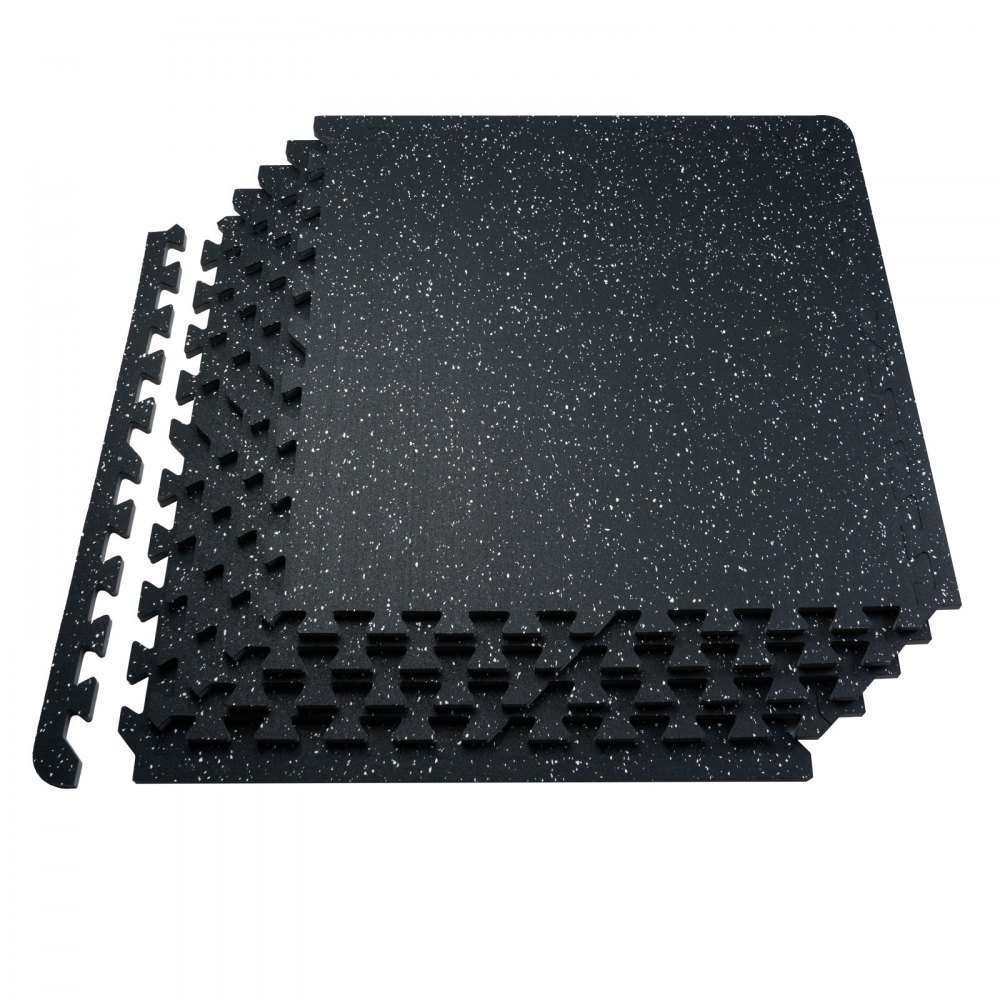
Twelve interlocking 24 x 24 in tiles with a rubber top layer on EVA foam, 0.56 in (14.2 mm) thick, covering 48 sq ft with edge strips.
Which suits what you want to do
Swings, cleans and snatches: a kettlebell
If your sessions are built on swings, cleans, snatches or Turkish get-ups, the kettlebell shape and loop handle are made for them. Most of these lifts use one bell at a time, so you can start with one size and add a second later.
The PRISP cast iron range runs to 40 kg, and the PRISP Competition bells keep one size from 8 to 32 kg.
Kettlebells to look at
- If you want bells up to 40 kg
Single-piece powder-coated cast iron bells in 14 weights from 4 to 40 kg, marked in kg and lb with a colour ring for each weight.
from$67.99 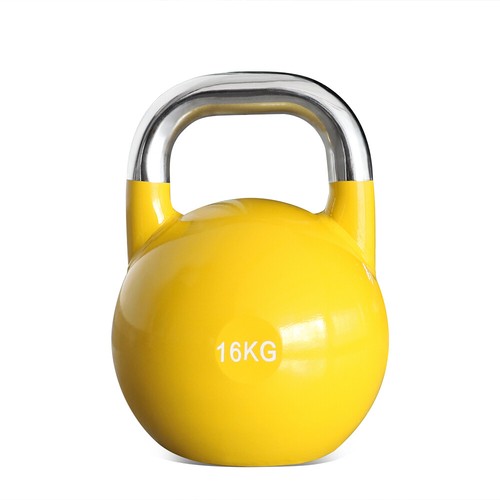 If you want one size at every weight
Cast steel bells in seven weights from 8 to 32 kg, with one body size, base and handle size at every weight.
from$84.99
| Model | PRISPPRISP Powder-Coated Cast Iron Kettlebell | PRISPPRISP Competition Kettlebell |
|---|---|---|
| Best price | $67.99 | $84.99 |
| Check price | ||
| Min weight | 4 kg (9 lb) | 8 kg (17.5 lb) |
| Max weight | 40 kg (88 lb) | 32 kg (70.5 lb) |
| Material | Cast iron, single piece, powder coated | Steel (cast steel), colour-coded |
Presses, rows and curls: dumbbells
If you mostly press, row, curl and raise with a weight in each hand, dumbbells keep the load centred on your grip and come in smaller steps. Hex heads stop them rolling between sets.
PRISP sells its hex dumbbells singly from 5 to 60 lb, so buy two of each weight for a pair.
Dumbbells to look at
- If you want to buy one at a time
Rubber-encased cast iron hex dumbbells sold singly from 5 to 60 lb, with a contoured handle and a rubber insert.
from$39.99
Several weights in little space: adjustable
If you want several weights without a row of bells or a dumbbell rack, one adjustable kettlebell covers a range of swing and press weights, and a pair of adjustable dumbbells covers pressing and rowing.
The VEVOR K002 sets from 5 to 44 lb. The PRISP 200 lb set loads each dumbbell to 100 lb with 2.5, 5 and 10 lb plates, and the Merach 2444 pair sets from 1 to 4 kg for light work.
Adjustable kettlebells and dumbbells to look at
- If you want one bell in pounds
One bell with seven settings from 5 to 44 lb (2.3 to 20 kg) in 6.5 lb steps, on a 28.5 mm die-cast aluminium handle.
from$141.54  If you want heavy dumbbells from one set
Two 16 in chrome knurled handles with cast iron plates and threaded collars, loading to 100 lb (45.36 kg) per dumbbell.
from$379.99 If you want a light pair
A pair of light dumbbells, each set to one of 4 weights from 1 to 4 kg (2.2 to 8.8 lb) by sliding sections off a locked dovetail. Not for heavy presses or rows.
from$144.99
Frequently asked questions
Kettlebell vs dumbbell: which is better?
Neither is better overall. A kettlebell's weight sits below and in front of the handle, which suits swings, cleans, snatches and Turkish get-ups. A dumbbell is balanced around your hand, which suits presses, rows, curls and raises. Choose by the lifts you plan to do most.
Can a kettlebell replace dumbbells?
For some lifts. You can press, row, squat and carry with a kettlebell, but in a press the bell rests on the back of your forearm, and fixed kettlebells usually step in 2 or 4 kg jumps. Dumbbells come in smaller steps and are easy to use in pairs, one in each hand.
Should I buy a kettlebell or dumbbells first?
Buy for the lifts you will do most. One kettlebell suits a short routine built on swings and get-ups with very little kit. A few pairs of dumbbells suit pressing, rowing and curling. If you choose a bell, our kettlebell weight guide quotes published starting weights.
Do I need two kettlebells?
No. Most kettlebell lifts use one bell. A matching pair is for double kettlebell work, such as double cleans or presses, and means buying the same size twice. A second, heavier bell is the more common next step for swings.
Are kettlebells and dumbbells sold in kg or lb?
Both, depending on the maker. Many kettlebells are made in kg sizes and some are marked in both units, while many US and Canadian dumbbells come in 5 lb steps. A 16 kg kettlebell is about 35 lb.
Is a kettlebell worth it for a home gym?
It suits you if you want to swing, clean or do get-ups and have clear space in front of and behind you. It suits you less if you mainly want to press and curl in small steps, where dumbbells fit better, or if the only space is a cramped corner with no room to swing.
How we chose
We have not tested these kettlebells or dumbbells. Every figure here comes from the makers' own pages or the maker's own store listing, recorded in each product's sources, and we kept only products sold new by a seller inside each market. Where a maker does not state a figure, such as a handle diameter, we say so rather than guess. The picks are examples of each type, not a ranking.
Related tools
Get price drops on this kit by email
Prices change. We'll email you when one we compare drops, only when it's worth sending.