

We may earn a commission when you buy through these links, at no extra cost to you. Prices and details change often: check the product and price on the retailer's page before you buy (accuracy). How we make money
On this page
Drop pads are a pair of thick pads, usually foam-filled, that sit under the plates where a barbell lands, made to soften a dropped deadlift, clean or snatch and protect the floor under it. Most pairs we list are about 15 cm (6 in) high and about 75 x 60 cm (30 x 24 in) per pad. If you drop heavy, choose a pair with a stated load rating; for more foam under the plates, a taller pair; if you pack them away after each session, a lower, lighter pair.
In Canada, PRISP's Weightlifting Silencer Drop Pads are a pair of 30 x 24 x 6 in high-density foam pads in a stitched PVC shell, sold by PRISP's own Canadian store in Boucherville, Quebec.
Our picks
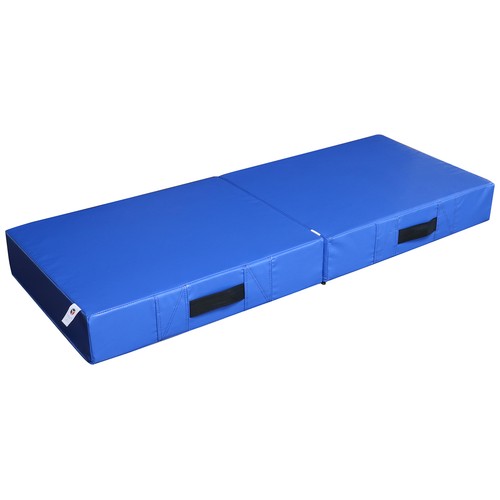 Best drop pads
A pair of 30 x 24 x 6 in high-density foam pads in a stitched PVC shell, each with a carry handle and a zip vent that lets air out as the pad compresses.
from$169.99
How to choose drop pads
- Height. The barbell pairs we list run from 12.5 cm (about 5 in) to 16 cm (about 6.3 in), and 15 cm (6 in) is the most common; the single strongman pad we list is 20 cm. A taller pad puts more foam between the plates and the floor. If you pull from the pads rather than the floor, the bar starts higher by the height of the pad.
- Size. Each pad is about 75 x 60 cm (30 x 24 in). You put one pad under each end of the bar, so you need floor space for the length of the barbell, and room to store two pads of that size when you are not lifting.
- Load rating. Most makers give no maximum load; of the pads we list, only one states one. Where a maker gives a figure, check whether it is per pad or per pair, and compare it with what you drop.
- Plates. Some pad makers say their pads are for bumper plates only. Check both the pad maker and the plate maker before you drop iron plates onto any pad; our bumper plates guide compares plates made to be dropped.
- Cover and fill. Most covers are PVC or PU vinyl; one pair we list has a non-slip fabric cover with a mesh top instead. Most pads are foam inside, and one pair we list is filled with recycled cotton. Zips let you get at the fill, and some covers have vents that let air out as the pad compresses.
- Weight and handles. Where makers state it, pads weigh 7.5 to 11 kg each. Most pairs we list have carry handles, which matters if you move them out of a living room or garage after each session.
- The floor around them. Pads take the plates; your feet still need a solid floor. Our gym flooring calculator works out how many rubber tiles or mats cover the rest of your lifting area.
PRISP Weightlifting Silencer Drop Pads: best drop pads
PRISP sells these from its own store in Boucherville, Quebec. Each pad is 30 x 24 x 6 in (76.2 x 61 x 15.2 cm) of high-density foam in a stitched PVC shell, with a carry handle and a zip vent that lets air out as the pad compresses.
PRISP gives no load rating on the product page. A 10 in pair is sold as a separate product.
Pros
- Sold as a pair
- Zip vent lets the foam compress and recover
- Carry handle on each pad
Cons
- No load rating given by PRISP
- Big to store: each pad is 30 x 24 in
Frequently asked questions
Are drop pads worth it?
They suit you if you drop the bar from the top of a deadlift, clean or snatch, or lift on a floor you need to protect, such as an upstairs room or a garage with neighbours close by. If you lower every rep under control onto solid rubber flooring, you may not need them. Measure first: a pair needs floor space for the length of your barbell, and room to store two pads of about 75 x 60 cm (30 x 24 in).
What is the difference between drop pads, crash pads and deadlift pads?
They are the same thing under different names. Makers call them drop pads, crash pads, silencer pads or deadlift pads: a pair of thick pads, usually foam-filled, in a tough cover, one under each end of the bar.
How thick should drop pads be?
The barbell pairs we list are 12.5 to 16 cm (about 5 to 6.3 in) high, and 15 cm (6 in) is the most common. Some makers also sell a 25 cm (10 in) version as a separate product. A taller pad puts more foam under the plates; a lower one is lighter and easier to store.
Can you drop iron plates on drop pads?
Check the pad maker first. Some say their pads are for bumper plates only, and most give no maximum load. Check the plate maker's guidance too: some plates are not made to be dropped at all, pads or not. Our bumper plates guide compares plates made to be dropped.
Do drop pads reduce noise?
Makers sell them to soften drops and cut noise and vibration, but none of the pads we list gives a noise figure, so we cannot compare them on it, and we have not measured them. What you can compare is height, foam, cover and size.
Drop pads or a lifting platform?
Pads are portable: you put them down for heavy pulls and store them after. A platform is a fixed area with rubber where the plates land and a solid surface where you stand, and it takes floor space all the time. Pads only cover where the plates land, so many home gyms put rubber flooring underneath as well; our home gym flooring guide covers the mats that go underneath.
How we chose
We have not tested these pads. We compared each maker's published height, pad size, materials, cover, weight per pad and load rating, and kept only pairs sold new from inside each market. Where a maker does not state a figure, such as a load rating, we leave it out rather than guess.
Related tools
Get price drops on this kit by email
Prices change. We'll email you when one we compare drops, only when it's worth sending.
Sources
- Strength Shop Soft Drop Pads: load per pad and bumper plates only
- Titan Fitness Silencer Drop Pad Set: size, cover and materials
- GYM MASTER Weight Lifting Crash Pads (PVC): height, size and cover
- GYM MASTER Deadlift Crash Pads with Mesh Top: weight per pad and use guidance
- FXR Sports Weight Lifting Cushion Drop Pads: size and weight per pad
- Net World Sports METIS Drop Pads: size and weight per pad
- Meister Crash Pads, Red/Gray (Pair): size, foam, cover and weight per pad