
We may earn a commission when you buy through these links, at no extra cost to you. Prices and details change often: check the product and price on the retailer's page before you buy (accuracy). How we make money
On this page
Match the floor to what goes on it. Lifting free weights needs solid rubber: tiles of 15 mm (5/8 in) or more, a lifting platform for heavy pulls, or drop pads if you drop the bar. A treadmill, bike or rower needs only a thin equipment mat sized to its footprint, and floor work and light dumbbells suit cushioned foam tiles.
For a Canadian home gym, VEVOR's 0.56 in (14.2 mm) interlocking tiles put a rubber top over EVA foam: the 25-tile pack covers 100 sq ft (9.3 m²) and the 12-tile pack 48 sq ft (4.5 m²). PRISP's Silencer pads, a pair of 30 x 24 x 6 in high-density foam pads sold by PRISP's own Canadian store in Boucherville, Quebec, go where a dropped barbell lands.
Our picks
 Best rubber-topped tiles
Twenty-five interlocking 24 x 24 in tiles, 0.56 in (14.2 mm) thick, with a rubber top layer over EVA foam. The pack covers 100 sq ft (9.3 m²) and includes 50 border strips.
from$255.90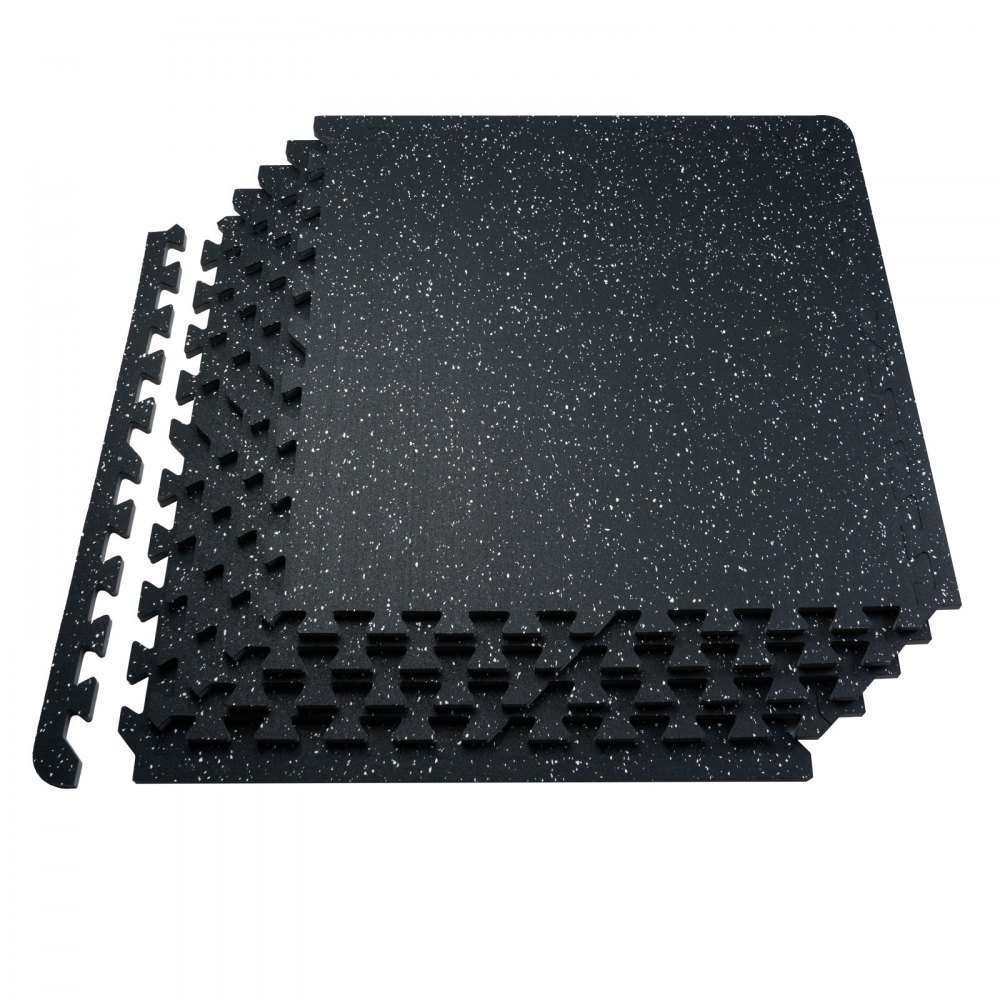 Best for a smaller area
The same VEVOR rubber-topped tile in a 12-pack: 48 sq ft (4.5 m²) of 0.56 in (14.2 mm) interlocking 24 x 24 in tiles, with 24 border edges.
 Best drop pads
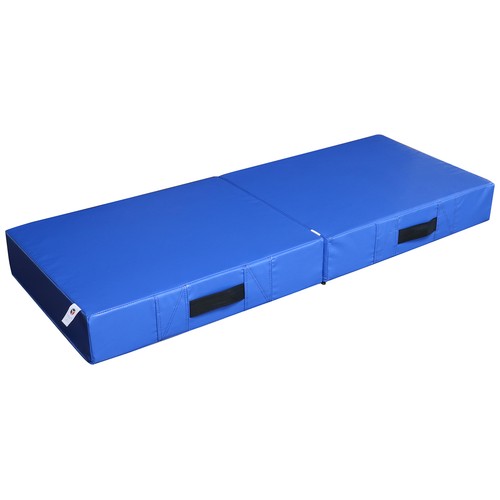
A pair of 30 x 24 x 6 in high-density foam pads in a stitched PVC shell, each with a carry handle and a zip vent that lets air out on impact.
from$169.99
| Model | VEVORVEVOR 0.56 in Interlocking Gym Floor Mats, 25 Tiles (HRD-XJD6614-25W) | VEVORVEVOR 0.56 in Interlocking Gym Floor Mats, 12 Tiles (HRD-XJD6614-12W) | PRISPPRISP Weightlifting Silencer Drop Pads, 6 in |
|---|---|---|---|
| Best price | $255.90 | — | $169.99 |
| Check price | No listed price | ||
| Material | Rubber top layer on EVA foam | Rubber top layer on EVA foam | High-density foam, PVC shell |
| Thickness | 14.2 mm | 14.2 mm | 152.4 mm |
| Tile size | 61 cm (24 in) | 61 cm (24 in) | Not listed |
| Footprint | Not listed | Not listed | 76.2 x 61 cm (30 x 24 in), each pad |
How to choose home gym flooring
- What goes on it. Free weights and barbells need solid rubber. A treadmill, bike, rower or bench needs a mat that covers its footprint. Stretching, bodyweight work and light dumbbells suit foam tiles, and for floor work alone our gym mats guide covers exercise mats. A mixed room can use more than one: rubber where you lift, a mat under the machine.
- Thickness. The flooring we list runs from 5 mm (0.2 in) equipment mats to 50 mm (about 2 in) rubber tiles, and drop pads are about 15 cm (6 in) deep. For a garage lifting floor we suggest solid rubber of 15 mm (5/8 in) or more. The makers of the thin mats describe them as floor protectors for machines, not as flooring for dropped weights.
- Material. Solid rubber is dense and heavy: a 23.5 in rubber tile we list weighs 12.7 kg (28 lb), while a 24 in EVA foam tile weighs 0.23 kg (0.5 lb). Foam is light and cushioned and easy to lift out and store. Rubber-topped foam tiles sit between the two. TPE, PVC and closed-cell foam mats are thin, light and wipe clean.
- Format. Square tiles lie edge to edge. Interlocking tiles have puzzle edges and come with border strips for a straight outer edge. Large mats are one piece for one machine. Rolls cover a long strip, such as a turf lane for a sled.
- Area. Measure the space and divide by the tile size, then add a few spare tiles for cuts. Our gym flooring calculator works this out for your room and tile size, with a waste allowance you choose.
Our pick for each case. Covering a floor for a home workout area: the VEVOR rubber-topped tiles, in the 25-tile pack, or the 12-tile pack for a smaller area. Dropping the bar: the PRISP Silencer pads.
VEVOR 0.56 in interlocking tiles, 25-pack: best rubber-topped tiles
This pack (model HRD-XJD6614-25W) holds 25 interlocking tiles, each 24 x 24 in (61 x 61 cm) and 0.56 in (14.2 mm) thick, with a rubber top layer over high-density EVA foam. It covers 100 sq ft (9.3 m²) and comes with 50 border strips for a finished outline. The pack weighs 27.5 kg (60.6 lb), black with white dots.
At 14.2 mm it sits just under the 15 mm (5/8 in) of solid rubber we suggest for a garage lifting floor, and the base is foam rather than solid rubber. Two VEVOR stores in Canada list it.
Pros
- Rubber wear surface over a foam base
- Covers 100 sq ft (9.3 m²) with border strips included
- Light enough to lift and store, at 1.1 kg per tile
Cons
- 14.2 mm: just under our 15 mm garage flooring threshold
- Foam base, not solid rubber
VEVOR 0.56 in interlocking tiles, 12-pack: best for a smaller area
This pack (model HRD-XJD6614-12W) holds 12 interlocking tiles, each 24 x 24 in (61 x 61 cm) and 0.56 in (14.2 mm) thick, with a rubber top layer over high-density EVA foam. It covers 48 sq ft (4.5 m²) and comes with 24 border edges for a finished outline. The pack weighs 13.2 kg (29.1 lb), black with white dots.
At 14.2 mm it sits just under the 15 mm (5/8 in) of solid rubber we suggest for a garage lifting floor, and the base is foam rather than solid rubber. The 25-tile pack above is the same tile for a larger floor.
Pros
- Rubber wear surface over a foam base
- Covers 48 sq ft (4.5 m²) with border edges included
- Light enough to lift and store, at 1.1 kg per tile
Cons
- 14.2 mm: just under our 15 mm garage flooring threshold
- Foam base, not solid rubber
PRISP Weightlifting Silencer Drop Pads: best drop pads
PRISP sells these from its own store in Boucherville, Quebec. Each pad is 30 x 24 x 6 in (76.2 x 61 x 15.2 cm) of high-density foam in a stitched PVC shell, with a carry handle and a zip vent that lets air out as it compresses. PRISP gives no load rating on the product page.
Pros
- Sold as a pair
- Zip vent lets the foam compress and recover
- Carry handle on each pad
Cons
- No load rating given by PRISP
- Big to store: each pad is 30 x 24 in
Frequently asked questions
How thick should home gym flooring be?
It depends on what goes on it. Under a treadmill, bike or rower, the equipment mats we list are 5 to 6.35 mm (about 1/4 in), which their makers describe as floor protection. For free weights, use solid rubber: we suggest 15 mm (5/8 in) or more, and the thickest tiles we list are 50 mm (about 2 in) in Australia, 40.6 mm (1.6 in) in the US and 20 mm in the UK. If you drop the bar, add drop pads, about 15 cm (6 in) deep, or a lifting platform.
Rubber or foam gym flooring?
Rubber for lifting, foam for floor work. Solid rubber tiles are dense and heavy; one 23.5 in rubber tile we list weighs 12.7 kg (28 lb). EVA foam tiles are light, at 0.23 kg (0.5 lb) for a 24 in tile, cushioned and easy to lift and store, which suits stretching, bodyweight work and light dumbbells but not dropped weights. Rubber-topped foam tiles sit between the two.
What is the best flooring for a garage gym?
For lifting on a concrete slab, solid rubber of 15 mm (5/8 in) or more where you train, with a lifting platform or drop pads where the bar lands on heavy pulls. A thin equipment mat is enough under a cardio machine, and a turf roll gives you a lane for sled pushes. The picks above show which of these we list in your market.
How many gym floor tiles do I need?
Divide the floor area by the area of one tile, round up, and add a few spare tiles for cuts at the walls. A 24 in (61 cm) tile covers 4 sq ft, so 48 sq ft takes 12 tiles before spares. Our gym flooring calculator does the sum for your room and tile size with a waste allowance you choose.
Can you use horse stall mats for a home gym?
Horse stall mats are large solid rubber mats sold for stables, and some home gym owners lay them as lifting flooring. We do not list any yet, so we cannot compare their specs here. Judge one as you would a gym tile: thickness, size and weight per mat, and whether the seller states what it is made of.
Is home gym flooring worth it?
If you lift free weights, or have a machine on a floor you want to protect, yes: rubber or a mat sits between the load and your floor. A machine mat only has to cover the machine, so measure its footprint first; the picks above cover lifting, drops and machines. If you only do bodyweight work, a single exercise mat may be all you need, and our gym mats guide covers those.
How we chose
We have not tested this flooring. We compared each maker's published material, thickness, tile or mat size, weight, pack contents and warranty, and kept only products sold new from inside each market. Where a maker does not state a figure, such as a load rating, we leave it out rather than guess. The budget award ranks by the maker's list price in that market.
Related tools
Get price drops on this kit by email
Prices change. We'll email you when one we compare drops, only when it's worth sending.
Sources
- Titan Fitness Deadlift Platform: frame sizes, tiles and band pegs
- Titan Fitness Rubber Lifting Tiles: tile size, thickness and weight
- Strength Shop Soft Drop Pads: load per pad and bumper plates only
- VEVOR 0.56 in gym floor tiles, 25-tile pack (HRD-XJD6614-25W): tile size, thickness, coverage and materials
- Everfit Exercise Equipment Mat 1.8 m (MAT-A-180-BK): size, thickness and material